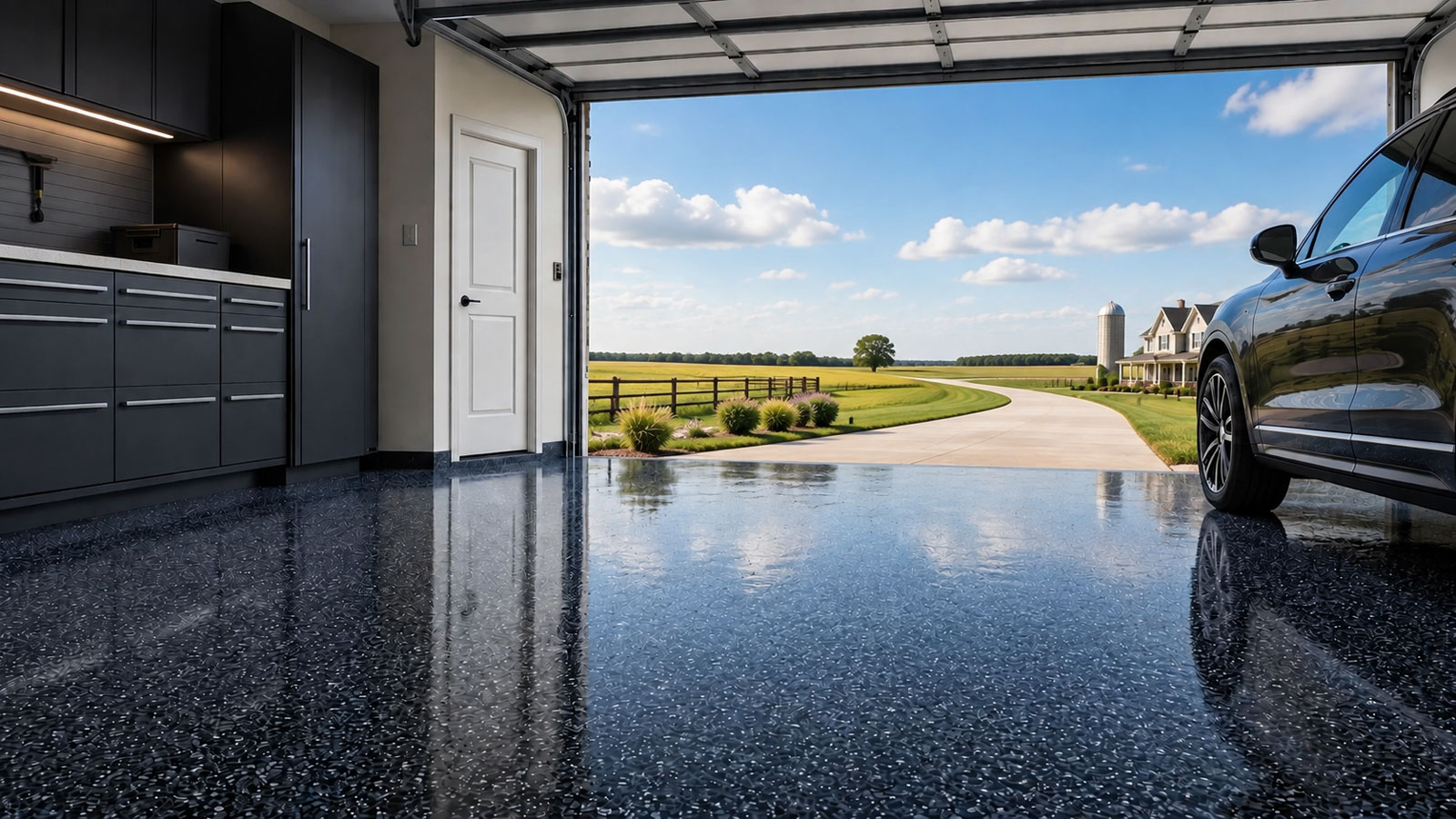
Garage Floor Coating in North Richland Hills, TX
Floor Coating Services in North Richland Hills, TX
North Richland Hills has an unusually helpful public explanation of how its stormwater systems changed as the city developed. The city says that more than fifty years of growth produced a mix of rural bar ditches, modern curb-and-gutter streets, concrete channels and tree-lined creeks. All eventually connect to the Trinity River watershed. That infrastructure variety is useful context for a garage-floor project because driveway runoff and wet-weather drainage can differ even within the same municipality.
The city's Public Works guidance also distinguishes public drainage from private responsibility. Staff may inspect blocked public systems, while homeowners typically maintain private systems and their own lots. The city notes that older and newer drainage systems can be overwhelmed during heavy rainfall, leaving yards soggy or, in severe cases, allowing water into structures. None of that proves an individual garage floor has a moisture problem. Inspect water paths and actual stains before prescribing repairs.
North Richland Hills also has established homes, remodeled properties and newer work within a North Texas climate of very hot summers and occasional intense storms. A garage might have decades of floor paint and tire residue, or a relatively recent slab with incompatible sealers. The installer should assess condition, movement, moisture and surface profile first; only then should epoxy, polyaspartic, traction and decorative finish become final decisions.
Local Project Context
NRH documents a citywide drainage mix accumulated over 50+ years, ranging from rural ditches to curb-and-gutter roads and concrete channels, plus a division of public and private maintenance responsibilities. Homeowner assessments must examine actual lot drainage and slab condition.
What Affects the Cost of Garage Floor Coating in North Richland Hills?
A North Richland Hills quote needs to account for both the concrete's history and the property's actual entryway conditions. The citywide mixture of drainage infrastructure cannot substitute for inspection of a garage, but it makes a one-size-fits-all assumption especially weak.
Surface profile, failed finishes, crack repairs, staining, access, traction and cure time should be described separately from any exterior drainage issue that would require different work.
- Past coatings: An established NRH home may have successive layers of paint or failed epoxy. Even a recently resurfaced floor may require grinding to remove incompatible sealers before a new system.
- Slab deterioration: Examine pitting, cracks, patches and moving joints rather than assume older concrete must be replaced. The repair plan should follow actual soundness and activity.
- Private drainage: NRH notes that lot-level drainage maintenance commonly rests with the owner. If rain enters at the door, the cause may need correction before a coating is worth installing.
- Oil and tire residue: Regular parking and home-shop work can leave contaminants that interfere with adhesion. The quote should distinguish ordinary cleaning from deeper surface preparation.
- Garage configuration: Steps, drains, odd corners, multiple bays and fixed storage complicate grinding and finish work. Ask how the installer measured these features.
- Material and season: North Texas heat, sunlight at entrances, selected texture, topcoat and allowable cure conditions influence products, scheduling and parking downtime.
Call for a clear, project-specific estimate — or request one online.
Fifty Years of NRH Drainage Systems and Why Each Lot Differs
North Richland Hills describes its stormwater network as a blend of systems created during more than fifty years of municipal development. Some streets retain rural-style bar ditches; others use curb-and-gutter drainage, engineered concrete channels or natural creeks. The water eventually reaches the Trinity River. Unlike a generic remark that 'rain happens,' this is an official explanation of why runoff paths can look very different across NRH neighborhoods.
The city's guidance says even those varied systems can be overwhelmed during heavy rainfall. It also clarifies that public blockage can be investigated by the city, whereas private drainage facilities and lot grading are generally the homeowner's responsibility. The practical coating implication is narrow but important: determine whether observed water is entering from outside, persisting through the slab or simply being tracked inside by vehicles.
Look for staining at the garage door after storms, recurring wet areas away from the entrance, and evidence of downspout discharge or standing water. If runoff crosses the threshold, a floor coating cannot change the direction of the water. If a possible slab moisture issue exists, a qualified installer should assess it before selecting a system.
When comparing bids, insist that any suspected drainage correction be identified as separate from coating labor. Surface grinding, crack repairs and finish layers should be explicit. This prevents a household from expecting a decorative surface to provide flood protection or solve unresolved exterior water management.
Existing Homes, Previous Paint and Summer Installation
NRH's mixture of established housing and continuing investment makes it particularly important not to use the year a house was built as a shortcut for evaluating its garage. Garage concrete can be repoured, coated, patched or heavily used at any stage of a home's life. Preparation starts by identifying the slab that actually exists today.
Old paint peeling under tires, embedded oils, weak patches or movement at joints can change the amount of grinding and repair needed. Newer concrete might have a finishing compound or sealer that also needs attention. A contractor should explain what materials will be removed, which cracks are considered active, and where further evaluation is needed.
Summer heat in the mid-cities area can produce substantial differences between a shaded garage interior and a sun-exposed threshold. For an epoxy or polyaspartic installation, product-specific working conditions and return-to-service time matter more than broad claims about a coating being 'one-day' or 'industrial strength.'
Homeowners should also discuss how the garage functions: a family entrance, equipment storage, car maintenance or hobby space may call for different surface texture and cleaning plans. Decorative flake systems can look good, but the finish should be judged for traction, ease of cleanup and compatibility with the full preparation-and-coating system.
Frequently Asked Questions
Are all North Richland Hills garages exposed to the same drainage risks?
No. The city identifies several distinct drainage types developed over more than fifty years. Property-specific grading and observed water entry matter more than a blanket neighborhood assumption.
Does the city repair water problems on my driveway?
NRH distinguishes public drainage maintenance from private responsibility. An owner should investigate private lot conditions separately and use the appropriate drainage professional if needed.
Can I coat over old garage paint?
That depends on its condition and compatibility, but loose or unsuitable material normally needs removal. The installer should assess and prepare the underlying concrete rather than cover a failing layer.
How do I compare fast-curing options in summer?
Ask about the full system's allowed slab temperature, prep requirements and time until parked vehicles can return. Cure speed alone does not determine overall suitability.
What local concerns deserve mention during an estimate?
Report recurring rainwater entry, patched concrete, tire-related peeling, oil spills, storage obstacles and available curing time. These are more useful than the home's age alone.
North Richland Hills Neighborhoods & Local Context
Typical Two-Car Garage Range
$3,000–$5,500
Typical range for a two-car garage. Final pricing depends on floor size, concrete condition, prep work, coating type, and finish options.
Helpful Guides
Other Service Areas