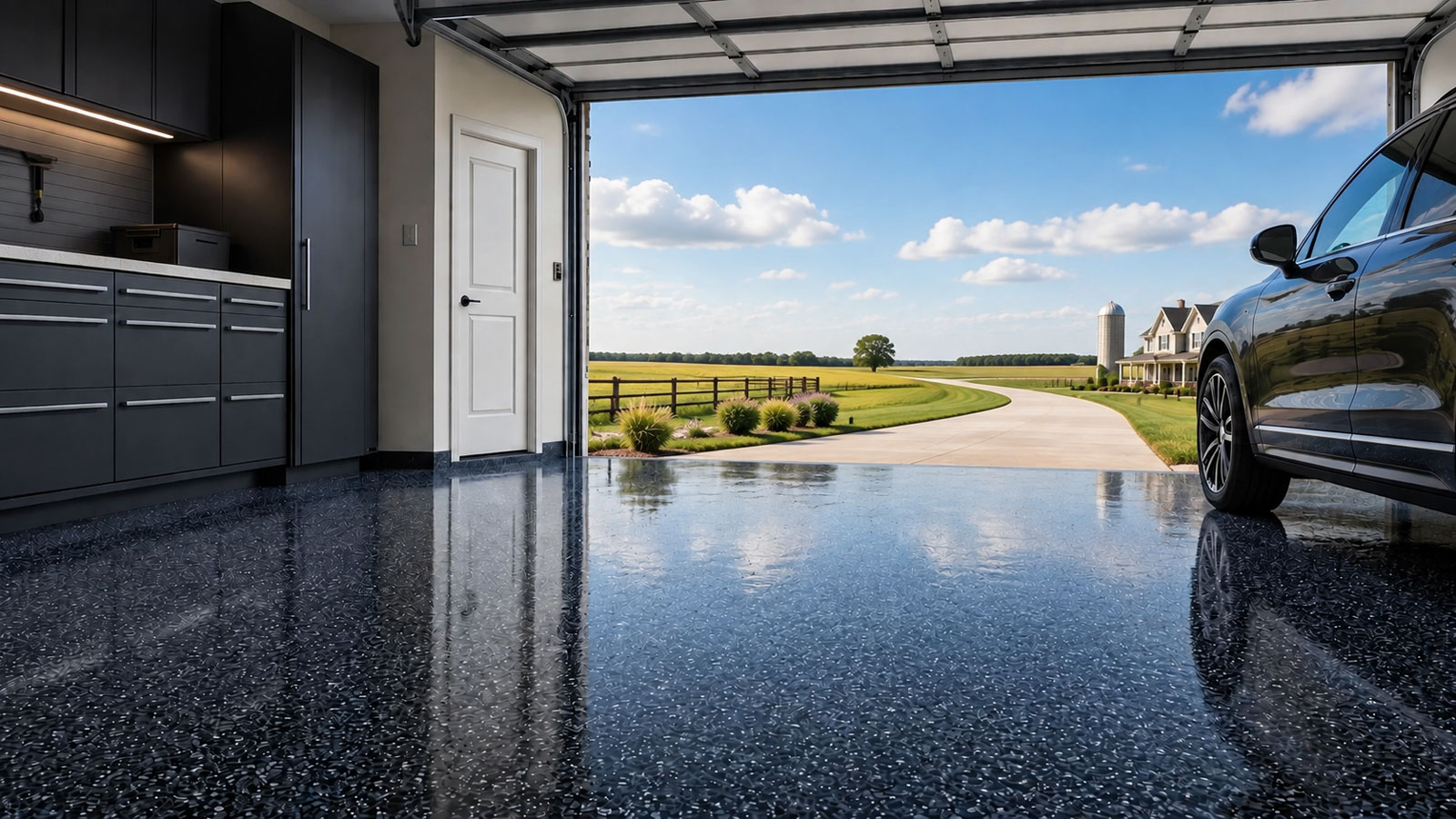
Garage Floor Coating in Colleyville, TX
Floor Coating Services in Colleyville, TX
Colleyville has a documented local reason to talk about what rain carries through a neighborhood. Its municipal Stormwater Management Program operates under Texas's Phase II MS4 requirements and explains that runoff collects pollutants before reaching surface waters. The city also tells residents that the Public Works Department maintains public storm-sewer inlets and handles reports of blockage. Those facts are not evidence that a homeowner's garage is damp, but they distinguish public drainage maintenance from the private slab and driveway questions that matter in a coating estimate.
Colleyville's stormwater ordinance expressly addresses improper dumping of oil, chemicals and other substances into public drainage. A garage used for vehicle maintenance can contain similar residues on its concrete floor. The issue for a coating project is adhesion and safe surface preparation, not an assumption that neighborhood stormwater has contaminated indoor concrete. Ask whether embedded oil, old paint, joints and past repairs have been evaluated.
This residential community between Grapevine and the airport also experiences the familiar North Texas combination of summer heat, bright entryway sun and seasonal heavy rain. Some garages serve as everyday household entrances; others have additional work or storage uses. Coating type, decorative flake texture, edge treatment and downtime should follow how the particular space is used and whether the slab is actually sound.
Local Project Context
Colleyville's public storm drains feed regional waterways without treatment; its Phase II MS4 program and specific storm-sewer maintenance guidance distinguish community drainage obligations from an individual homeowner's garage-floor preparation needs.
What Affects the Cost of Garage Floor Coating in Colleyville?
The visible size of a Colleyville garage is only one part of a floor-coating quote. The surface may have old sealers, tire marks, crack repairs or workshop residues that need attention before a finish can be applied.
Municipal stormwater rules help explain why runoff and contaminants deserve thoughtful management, but an estimator must establish which problems actually exist at the property rather than charge for hypothetical moisture conditions.
- Old surface treatments: Existing epoxy, paint or sealer must be assessed for compatibility and adhesion. A Colleyville garage used primarily for parking may still have coatings or tire residue that need mechanical removal.
- Work-area contamination: The city specifically addresses petroleum and hazardous materials in its stormwater program. On garage concrete, actual oil staining or chemical spills can increase cleaning and preparation requirements.
- Entryway runoff: Public inlets are maintained by the city, while driveway slope and private drainage are a different matter. Observe where rainwater travels before deciding whether any separate water-control work is needed.
- Cracks and joints: Expansion joints, patched areas, pitting and movement affect repair approaches. The installer should explain whether proposed fills are cosmetic or address a known preparation issue.
- Garage shape and access: Multiple bays, built-in cabinets, steps, edges and storage areas require preparation time. A measured scope can differ substantially from a simple square-foot calculation.
- Coating and traction: Sunlight at the door, decorative flake coverage, surface texture and a safe vehicle-return timetable can affect system choice and labor, particularly in hot weather.
Call for a clear, project-specific estimate — or request one online.
Stormwater, Vehicle Residues and the Garage Threshold
Colleyville's Stormwater Management Program explains that precipitation flowing over pavement can carry pollutants directly into creeks and larger waterways. Under the city's Phase II MS4 program, the municipality manages stormwater pollution prevention and prohibits improper discharges. The city also maintains public stormwater inlets and provides residents with a route for reporting clogs. These official records provide a concrete local context for water and vehicle-fluid discussions.
A garage-floor project involves a much smaller and more specific problem. Oil trapped in the concrete can interfere with bonding, while storm runoff crossing the threshold may leave grit and wetness. Those conditions have different causes, and neither should be assumed simply because citywide regulations mention stormwater pollutants. Ask what the installer actually observes in the parking spots, near the door and around drains.
If a public curb inlet is clogged, that may warrant a city report. If private grading directs rainwater toward the garage, a separate drainage professional may be needed. If water appears within the slab independent of weather, the installer should explain whether moisture evaluation is appropriate. Fresh coatings do not resolve municipal infrastructure or driveway design.
A useful written scope separates surface cleaning and profiling, repair, application layers, edge detailing and possible unresolved water issues. That clarity helps prevent a low-priced finishing proposal from concealing additional work discovered only after the garage has been emptied.
Residential Colleyville Garages: Appearance Versus Working Use
Colleyville is largely residential, but household garages do not all operate alike. One may be a daily family entry with bikes and storage, another may hold several vehicles, and another might be a home workshop. Those are plausible uses, not claims about specific local properties. The installer should establish what is actually stored, moved and spilled on the surface.
Where the homeowner wants an appearance upgrade, decorative flake color and topcoat finish can dominate the early conversation. Performance, however, begins with sound concrete and surface preparation. Prior sealers, old paint, weak patches, oil and failing coatings must be addressed before aesthetic samples become the deciding factor.
Regional heat adds a practical timing issue. Concrete near an open south- or west-facing doorway may be much warmer than shaded floor farther inside. The chosen coating system's product instructions should control permissible application conditions, cure time and when tires can return. 'Fast cure' is not permission to ignore surface temperature or moisture.
Choose traction and texture with daily habits in mind. A smooth glossy finish may wipe easily but can be slippery when wet; greater texture helps footing in some situations but can require more effort to clean. Ask for samples, a maintenance explanation and a written installation sequence tied to the measured concrete.
Frequently Asked Questions
Does Colleyville's stormwater ordinance apply to my indoor garage coating?
The ordinance primarily addresses pollutant discharges and the drainage system. It does not tell you whether your concrete is suitable for coating; an installer must assess the floor.
Who handles a blocked storm drain near my house?
Colleyville says its Public Works Department maintains public storm-sewer inlets. Private driveway or lot drainage should be assessed separately from public-system maintenance.
Will a coating hide motor-oil contamination?
It may cover discoloration, but that does not establish a reliable bond. Embedded contamination should be evaluated and appropriately treated during preparation before new layers are applied.
How important is texture for a Colleyville garage?
Think about wet shoes, parked vehicles and the garage's use as an entry. Review traction samples and cleaning needs rather than choosing from photographs alone.
What detail belongs in the estimate?
Ask for surface profiling, old-coating removal, crack repairs, oil treatment, edges, finish layers, traction and cure timing. Each item helps explain why similarly sized garages can cost differently.
Colleyville Neighborhoods & Local Context
Typical Two-Car Garage Range
$3,000–$5,500
Typical range for a two-car garage. Final pricing depends on floor size, concrete condition, prep work, coating type, and finish options.
Helpful Guides