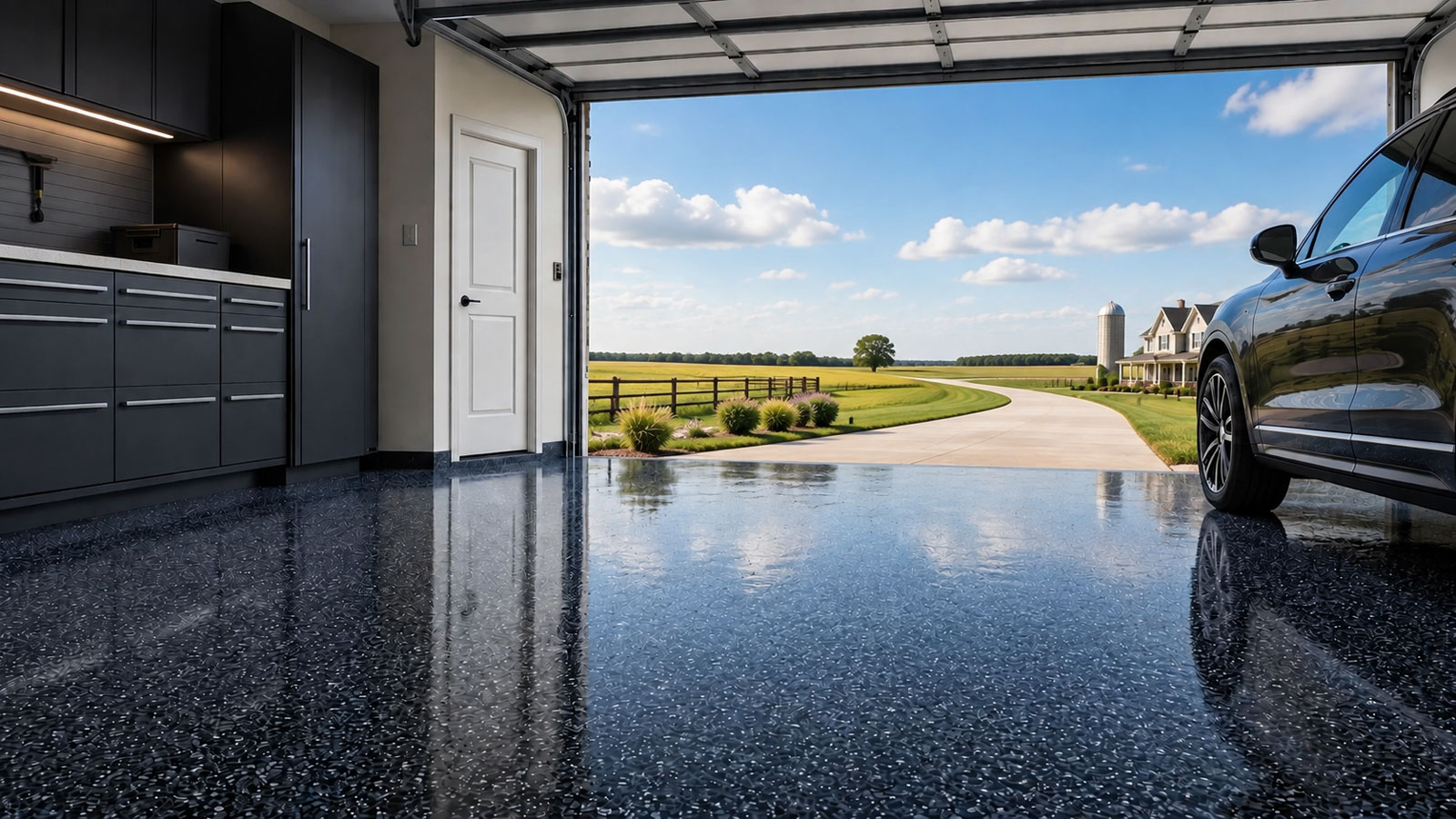
Garage Floor Coating in Flower Mound, TX
Floor Coating Services in Flower Mound, TX
Flower Mound's official Master Plan connects its identity to the north shore of Grapevine Lake and the Cross Timbers landscape of rolling hills, oak forest and prairie. It also describes how a residential boom in the late 1990s led to the SMARTGrowth framework, which has operated since February 17, 2000. Those are specific development and geographic facts, but neither tells a homeowner what condition a garage slab is in. They explain why the town includes different construction periods and terrain-related drainage settings that deserve property-specific inspection.
The town's floodplain guidance is equally careful: residents can have local drainage problems even without living directly beside a creek or Grapevine Lake. Its Engineering Division administers floodplain areas and reviews public and private drainage work. A garage coating cannot correct land grading, but observed rainwater at a driveway threshold should be investigated before a finishing project begins. Do not infer that any particular home is damp just because of its landscape.
Summer heat, sun at exposed thresholds and ordinary vehicle wear create additional considerations. A garage used for household storage and daily parking can have different needs from a workshop or a larger multi-bay space. Before selecting epoxy, polyaspartic or decorative flake, an installer should inspect the actual concrete surface, repairs, previous coating, contaminants, moisture indications, desired traction and scheduling.
Local Project Context
Flower Mound's Cross Timbers topography, north-shore Grapevine Lake setting, documented late-1990s growth, and SMARTGrowth program dating to February 2000 create real variation in property context. Public floodplain guidance explicitly warns that local drainage can matter away from mapped creeks.
What Affects the Cost of Garage Floor Coating in Flower Mound?
The town's growth and landscape history makes a square-foot-only garage estimate incomplete. The actual repair and preparation needs on a 1990s-era property may be different from those on a more recently completed garage; house age is not itself a concrete diagnosis.
Ask the contractor to examine previous finishes, cracks, entry drainage, oil contamination and detail work before pricing the decorative system. Work outside the garage, such as driveway runoff correction, should be a distinct proposal.
- Construction and finish history: Flower Mound's late-1990s expansion and subsequent SMARTGrowth era span different property settings. Old paint, coatings or sealers—not just date of construction—can govern grinding and surface preparation.
- Visible cracks: Assess cracks, patches, joints and signs of movement individually. Rolling Cross Timbers terrain does not, by itself, mean any given garage slab has a structural problem.
- Observed runoff: The town notes drainage flooding can occur away from lake and creekfront properties. Where water actually enters the garage, exterior correction should be scoped separately from coating.
- Garage size and use: Larger multi-bay garages, home workshops and storage areas may increase preparation time, contamination treatment or edge finishing beyond ordinary square footage.
- Surface contamination: Oil, hot-tire residue, dirt and prior floor treatments can affect bonding. Ask what cleaning, grinding and compatibility steps the quote includes.
- Topcoat and schedule: Summer sunlight, traction requirements, decorative flake choice and system-specific cure limits influence materials and how long vehicles must remain out of the garage.
Call for a clear, project-specific estimate — or request one online.
From the Cross Timbers to Grapevine Lake: Drainage Is a Property Question
Flower Mound describes its setting through the Cross Timbers landscape—gently rolling hills, oak forests and native prairies—and the northern shore of Grapevine Lake. Those landforms are part of the town's documented identity, but describing them is not the same as inspecting a homeowner's driveway. Two houses in the same general area can have very different runoff routes because of grading, downspouts and construction details.
The town's floodplain management material explicitly warns that properties away from lakes and creeks can still experience local drainage flooding. Its Engineering Division administers floodplain matters and reviews drainage work. Homeowners can consult the town's floodplain manager and mapping tools to understand general risk, then evaluate the specific conditions they see when rain falls.
At the garage, check whether water accumulates near the overhead door, whether a driveway slopes inward, and whether damp-looking patches persist when the entrance is dry. Those observations distinguish water flowing over pavement from possible slab moisture or old staining. A coating should not be sold as a solution to a grading or flood-control issue.
If water entry needs correction, investigate it before scheduling the floor installation. Once a slab is sound and suitable, a continuous properly applied coating can simplify routine sweeping and cleanup. It does not prevent standing rainwater, replace drainage work or eliminate the need for maintenance.
Flower Mound's Growth Eras and the Real Slab Underfoot
Flower Mound's Master Plan documents a substantial residential boom in the late 1990s followed by a stronger growth-management program. SMARTGrowth has been effective since February 17, 2000. This means the housing landscape spans different development periods, but garage floors may have been poured or resurfaced at dates unrelated to the homes around them.
A floor should be inspected for what is actually present: bare or painted concrete, oil residue, prior epoxy, surface repairs, cracking, worn areas and moisture symptoms. A newer-looking floor is not automatically ready for coating, just as an older one is not automatically beyond repair. Mechanical surface preparation and repair plans should follow the manufacturer's requirements and the slab's condition.
Heat creates a scheduling issue separate from substrate history. Exposed apron concrete can be hotter than the garage interior under North Texas summer sun. Ask the installer to verify acceptable substrate conditions before work and explain what happens if weather or the surface temperature falls outside the coating system's limits.
A family that uses the garage as a main entrance may put more value on wet-shoe traction, while another owner wants easy cleaning after car or hobby work. Examine textured samples, flake coverage and edge details; agree on when vehicles, shelves and equipment can return before the floor is emptied.
Frequently Asked Questions
Does Flower Mound's terrain mean my garage needs moisture treatment?
Not automatically. The town's Cross Timbers and lakeside setting describes regional geography. A garage needs property-specific observation and assessment, not an assumption based on nearby landforms.
Is flood risk limited to homes beside Grapevine Lake?
No. Flower Mound's guidance says local drainage flooding can affect places away from creeks or the lake. Check your property's actual floodplain context and observed runoff.
Should a late-1990s Flower Mound home receive a different coating?
The home's era alone is insufficient. The floor's coatings, repairs, strength, contaminants, moisture conditions and intended use should determine preparation and system choice.
Can a decorative flake finish help with wet-shoe traction?
Texture may improve grip, but compare actual samples and understand cleaning needs. A coating does not eliminate rainwater or make every wet surface slip-proof.
What should a local quote spell out?
Look for old-finish removal, grinding, crack work, any drainage concern, base and top layers, texture, entry transitions and accurate cure timing before vehicles return.
Flower Mound Neighborhoods & Local Context
Typical Two-Car Garage Range
$3,000–$5,500
Typical range for a two-car garage. Final pricing depends on floor size, concrete condition, prep work, coating type, and finish options.
Helpful Guides