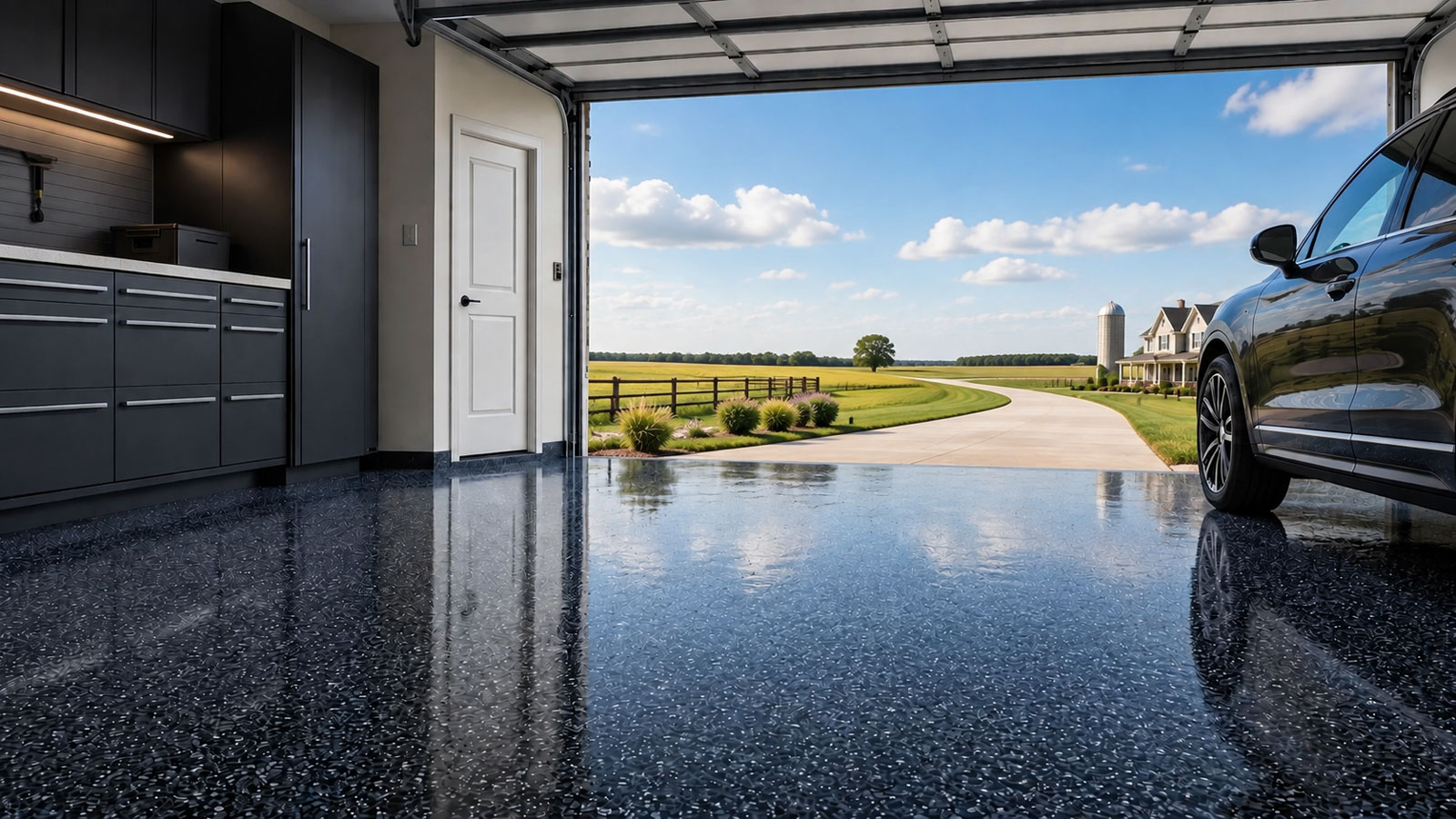
Garage Floor Coating in Fort Worth, TX
Floor Coating Services in Fort Worth, TX
Fort Worth's residential geography ranges from historic central neighborhoods to new development around the Alliance corridor. That difference matters for garage layout and slab history, but it cannot establish whether any particular floor has paint, sealer or damage. The city's Stormwater Management Program Master Plan also describes highly varied flood hazards, noting that approximately 75 percent of Fort Worth's repetitive flood-insurance claims occurred outside mapped FEMA floodplains during its analysis period. This is a concrete warning against assuming that a map alone tells the story of drainage at a garage.
Fort Worth's stormwater documents explain how older neighborhoods sometimes have drainage systems that replaced creeks but were built for smaller storms, making overland runoff possible in severe weather. In June 2026, the city reported a new repetitive-loss area analysis to update its floodplain management plan. Those are public system observations, not proof that a specific garage is wet or flood-prone.
North Texas summer heat creates a separate garage-floor concern. Sun can heat the concrete at open doorways differently from shaded slabs, affecting application and curing. Before selecting epoxy, polyaspartic or flake coatings, an installer should inspect cracks, previous finishes, oil and actual water history, then explain mechanical preparation, system layers, traction and a realistic parking-return plan.
Local Project Context
Fort Worth's master stormwater review found about 75% of repetitive flood claims outside FEMA floodplains, highlighting why property-specific driveway and water-entry inspection matters.
What Affects the Cost of Garage Floor Coating in Fort Worth?
A garage in an older Fort Worth home may have repainted or patched concrete, while another newer floor may have sealers. Both can require substantial preparation even if the area is the same.
Ask for a project scope based on actual surface conditions, repairs, contaminants and the complete coating. Municipal flood statistics should never be used to assume moisture in a particular garage.
- Old paint or sealers: Prior surface treatments can impair adhesion and may require grinding or removal. Home age alone is not a reliable guide.
- Cracks and worn areas: Spalls, joints, repairs and active movement need examination before finishing. Coating is not a structural repair.
- Observed entryway water: Fort Worth studies show flood risk can extend beyond maps, but a garage needs its own drainage and moisture assessment.
- Traffic and oil contamination: Regular parking, home workshops and commercial floors can bring different oils, chemicals and wear to the concrete.
- Floor geometry: Multiple bays, steps, drains, vertical edges and stored equipment can complicate preparation and finishing.
- Cure and texture: Flake finish, traction, sun and substrate-temperature restrictions affect materials and safe vehicle-return timing.
Call for a clear, project-specific estimate — or request one online.
Fort Worth's Drainage History and What a Garage Coating Cannot Fix
Fort Worth's Stormwater Management Program Master Plan documents a complex mixture of FEMA-mapped floodplains and urban areas prone to localized flooding outside those zones. At the time of analysis, approximately three-quarters of repetitive flood insurance claims were outside FEMA floodplain designations. The plan describes older storm drains built for smaller events and creeks replaced by underground systems with limited overflow capacity. These are substantive public infrastructure facts, not findings about an individual household's concrete floor.
In June 2026, Fort Worth's government reported additional repetitive-loss area analysis and an expected updated floodplain management plan. That confirms flood-risk assessment remains an active city issue. For a garage coating, however, the decisive questions are whether rain actually crosses a driveway threshold, where gutters discharge and whether any persistent dampness suggests a slab concern.
If stormwater enters from outside, a coating cannot change the grade or protect the building from a flood. If moisture appears through the concrete, appropriate evaluation may be needed before coating. A competent installer distinguishes these causes and will not turn a citywide risk statistic into a generic moisture-repair upsell.
A proposal should document preparation, coating removal, repairs, any tests indicated by observed conditions, layers and timing. It should also identify work outside the contractor's expertise. Clear boundaries are important when customers compare coating quotes against possible drainage work.
Historic Neighborhoods, Alliance Growth and the Concrete Underfoot
Fort Worth's built environment includes older neighborhoods, infill, remodels, newer north-side development and various commercial spaces. An older-looking property might have a garage poured more recently than the house, while a newer floor can still carry sealer or residues that affect adhesion. Neither setting justifies skipping inspection or automatically prescribing the same system.
Check for paint that lifts under tires, cracks near joints, oil from parked vehicles, previous patching and worn concrete by the entry. Proper grinding and any necessary repair matter more than claiming one coating family will perform on any surface. A shop used for rolling equipment or chemicals adds different requirements from a family parking garage.
Summer weather can affect both timing and maintenance. Direct sun on the outer slab may make it hotter than shaded concrete, so the chosen system's substrate-temperature and cure requirements should guide work. If afternoon thunderstorms bring water at the entry, assess the actual source rather than assume city drainage is the cause.
A decorative-flake finish may help traction when water and road grit are tracked inside. A very smooth surface may be easier to wipe, while heavy texture can take more brushing. Consider how people use the space and what spills are likely when choosing between samples.
Get a written plan for grinding, repairs, coating layers, edges and when vehicles and heavy storage can return. Those practical details create value in both established and fast-growing Fort Worth neighborhoods.
Frequently Asked Questions
Does a Fort Worth floodplain map tell me my garage is dry?
No. City studies document localized flooding outside FEMA floodplains. But neither that finding nor a map diagnoses any individual slab; inspect the property.
Can coating prevent water flowing in under my garage door?
No. A floor coating cannot correct grading, gutters or exterior runoff. Those concerns require separate assessment and possible repairs.
Does an older Fort Worth house need an entirely new slab?
Not necessarily. House age and concrete age differ. Sound concrete may be suitable after appropriate preparation, while serious damage needs evaluation.
Is fast-cure coating always better during summer?
Not always. The full system must be applied and cured within the manufacturer's actual temperature and moisture limits.
What should a Fort Worth quote contain?
Require grinding and prior-finish removal, crack repair, full system layers, edge treatment, finish texture and realistic vehicle-return timing.
Fort Worth Neighborhoods & Local Context
Typical Two-Car Garage Range
$3,000–$5,500
Typical range for a two-car garage. Final pricing depends on floor size, concrete condition, prep work, coating type, and finish options.
Helpful Guides